
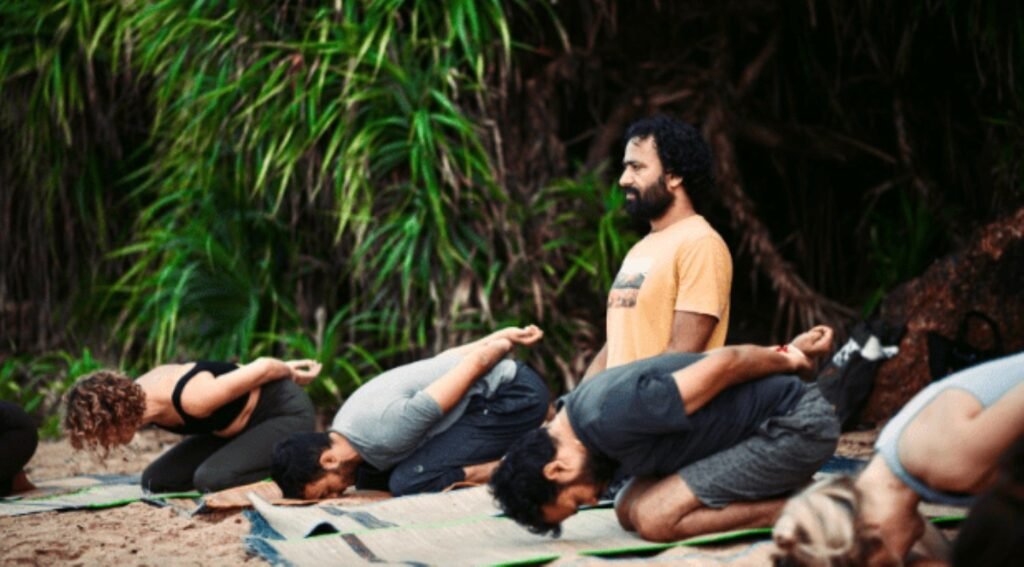
The full moon has always been special in yoga. It marks a pause in the moon’s cycle. This is a moment when things feel complete, inviting us to slow down, reflect, and let go before the cycle starts again. For yoga students, this time means moving gently, breathing deeply, and looking inward with kindness.
This guide shares the Full Moon practice taught by Devvrat Yoga. It follows the exact order and intention of the original sequence. Each step flows softly into the next. It will be guiding you through the gentle rhythm of the moon’s cycle, just like the moon moves each month.
What Is Moon Salutation (Chandra Namaskar)?
Moon Salutation, or Chandra Namaskar, is a yoga practice that matches the calm, quiet energy of the full moon. Unlike faster, more intense yoga flows, this sequence is slow and gentle. It helps bring calm, balance emotions, and steady your breath. It is not about pushing yourself hard. It is about listening to your body and mind.
The full moon is a turning point. The moon gathers light until it is fully bright for about 28 days. Then it slowly fades, which marks the end of the cycle.
In yoga, the full moon is a time to pause and think about what we have experienced. Experience the happy moments, the hard work, the lessons, and feelings we might have missed. As the moon begins to fade, it invites us to hold onto what helps us and gently release what no longer serves us.
How Moon Salutation Matches the Moon’s Energy
Moon Salutation moves slowly and peacefully. Each breath is calm and meaningful. The practice is about letting go, being aware, and not trying to perform or push. It is a quiet and healing way to connect with the natural rhythm of the moon and yourself.
Lunar Energy Inside Your Body
In yoga, the moon represents one of two main energy flows in the body called Nadis. These channels carry prana, which is the life energy that helps us move and rest.
The moon energy is cool, calm, and focused inward. It works together with its partner, which is the sun’s energy. Your body and mind feel clear and steady once these two balance each other.
Moon Salutation helps support this balance. It slows things down and turns your attention inside, letting your energy flow smoothly instead of rushing. That is why this practice is often done in the evening, especially under the glow of a full moon.
Honoring the Moon With Movement
Moon Salutations let you connect with the moon’s cycle through your body. The moves help you feel grounded through your feet, open in your hips and chest, and soft in your breathing.
Instead of moving fast, you flow gently from one pose to the next, paying attention to how your body feels and how your breath moves. It makes it perfect for times when you are feeling stressed or your mind is busy.
The goal is simple: slow down, notice how you feel, and let go of what you don’t need anymore.

The Moon Salutation Sequence: Step-by-Step Guide
Follow this full moon yoga sequence slowly. Let your breath lead you and take breaks whenever you need.
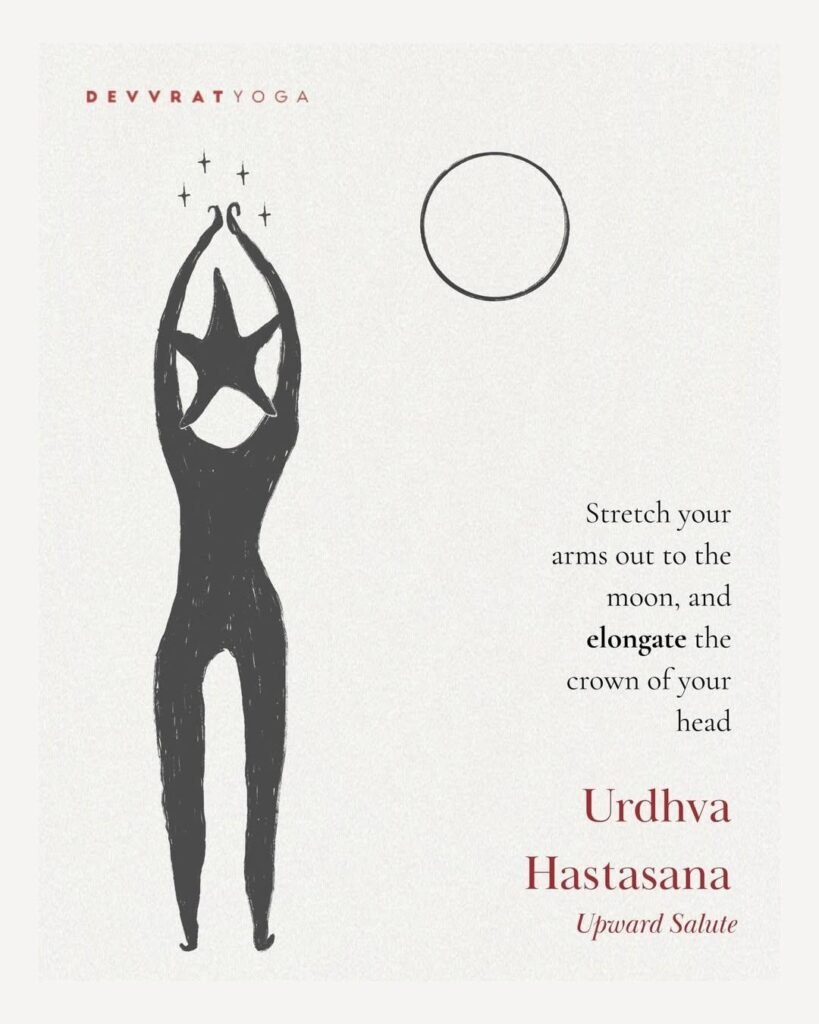
1. Urdhva Hast Asana: Upward Salute
Start standing tall with your feet firmly on the ground. As you breathe in, slowly raise your arms toward the sky, reaching gently as if you’re greeting the moon.
Lift the top of your head and lengthen your spine without straining. Your body should feel open and ready. This pose helps you feel present, upright, and aware.
Keep your breath calm and steady. There is no need to hurry.
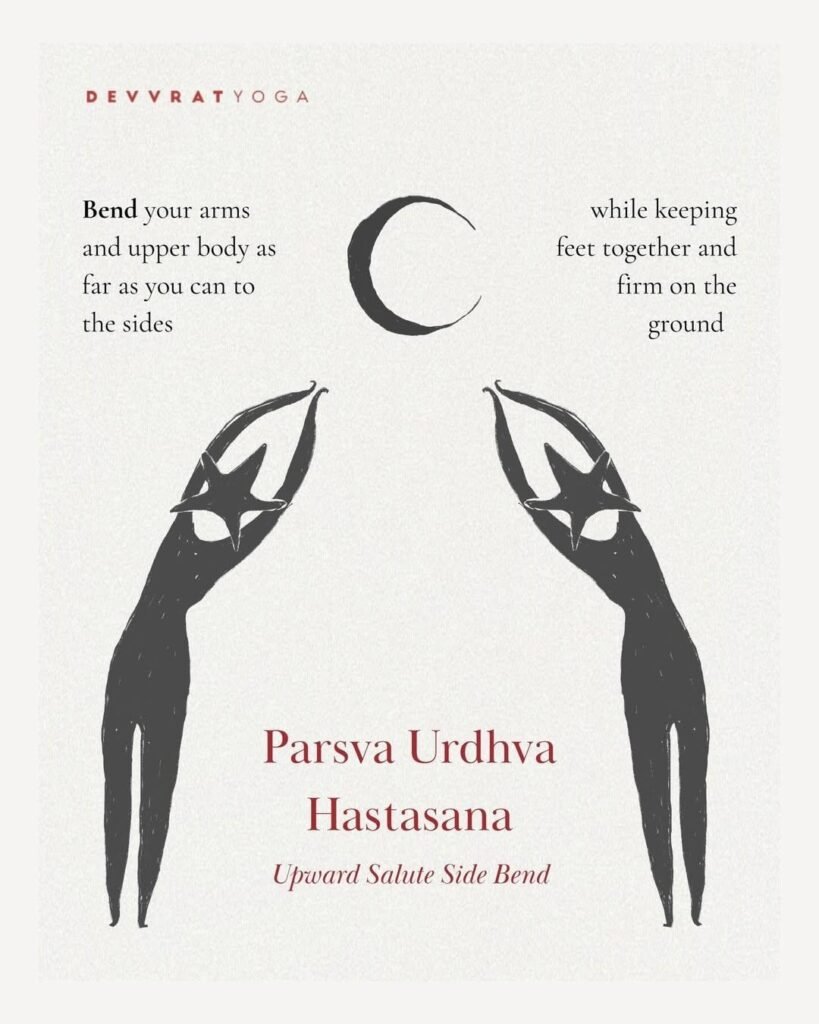
2. Parsva Urdhva Hast Asana: Side Bend
Slowly bend your body to one side from the Upward Salute. Keep your feet steady and legs strong.
Feel a gentle stretch along the side of your body, opening space along your ribs and waist. Breathe smoothly as you move. Then slowly bend to the other side.
These side bends help your body open up while staying balanced and grounded.
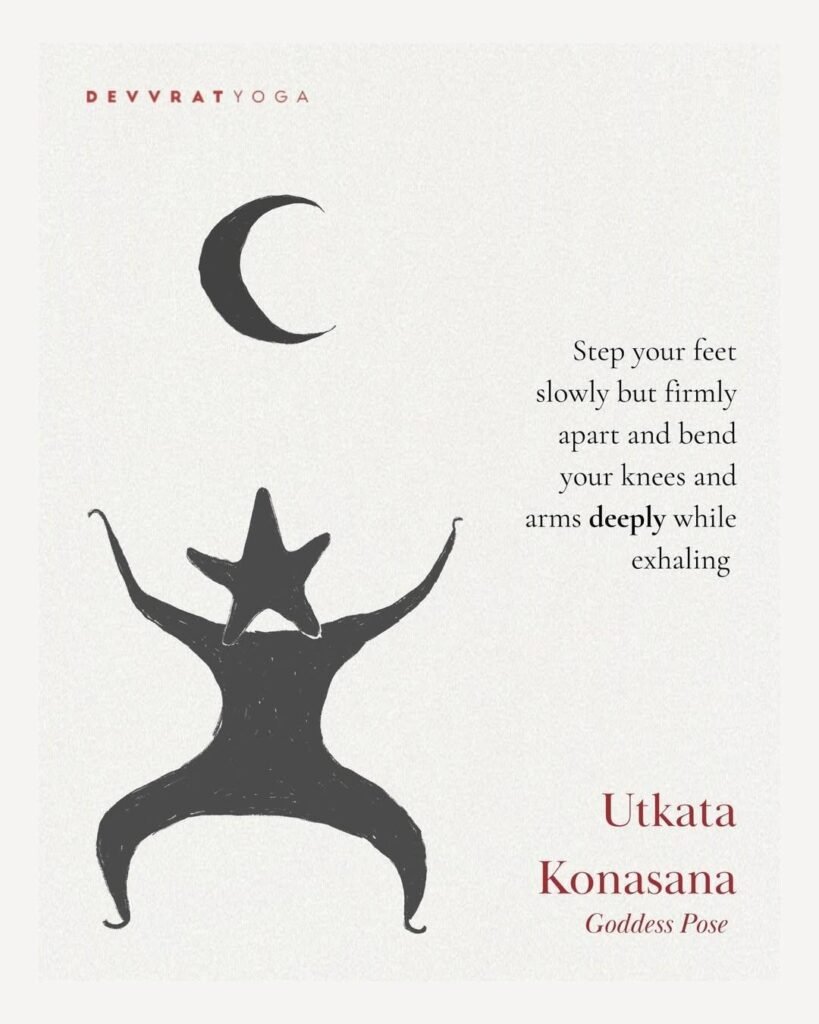
3. Utkata Kon Asana: Goddess Pose
Step your feet wide apart and turn them slightly outward. As you breathe out, bend your knees deeply and relax your hips.
Bend your arms and lower them, coming into a strong but grounded stance. Goddess Pose helps you feel stable and connected to the earth.
With your wide base, your upper body can relax. This pose helps release tension in your lower body while building steady strength.
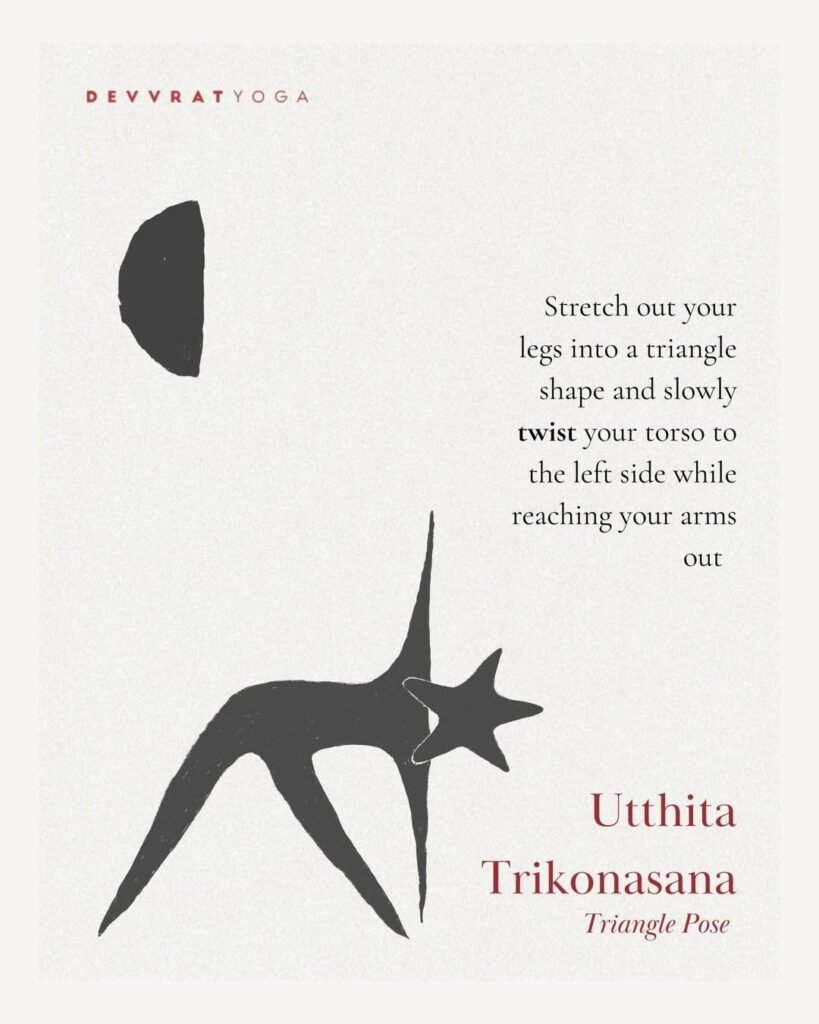
4. Utthita Trikon Asana: Triangle Pose
Straighten your legs and take a wide step out from Goddess Pose. Slowly lean your torso to one side and stretch your arms out wide.
Your legs stay strong and steady while your torso opens and twists gently. Triangle Pose helps open your chest and sides, balancing effort with ease.
Keep your gaze soft and your movements slow and gentle.
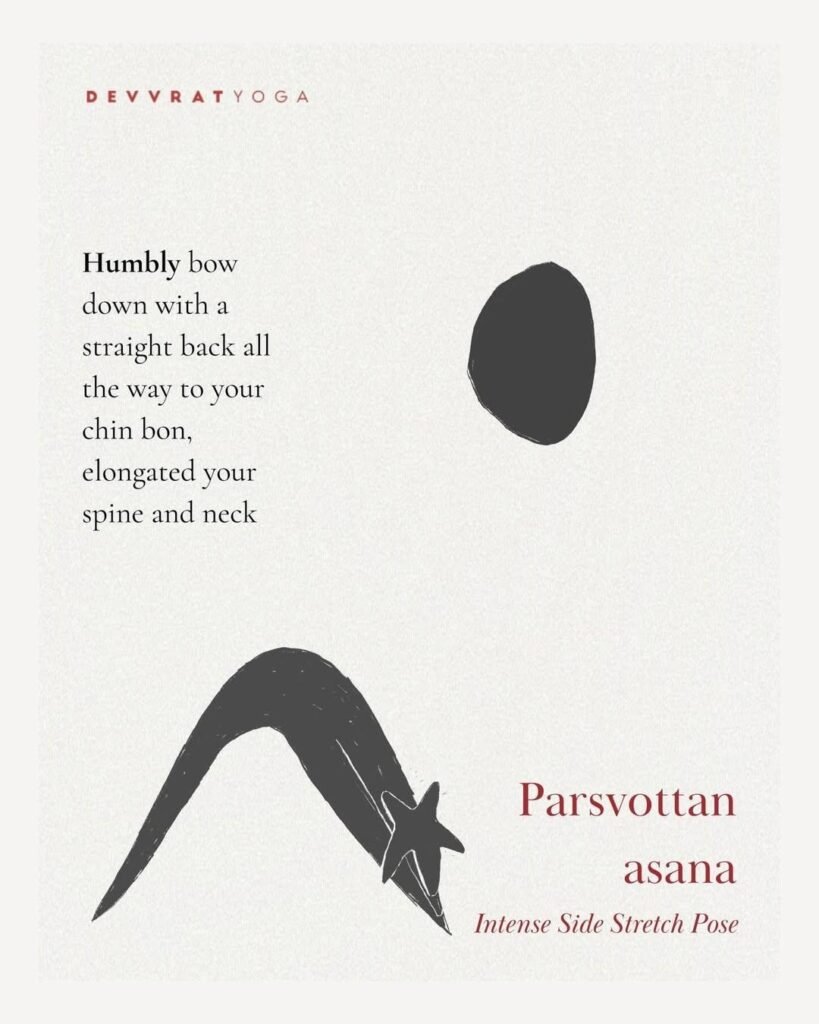
5. Parsvottan Asana: Intense Side Stretch Pose
Slowly fold forward with a long, straight spine from Triangle Pose. Don’t push too hard. Let your breath guide you, not how far you can go.
Relax your head and neck, keeping your spine long. This pose helps you calm your mind and gently release tension.
Stay focused on your breath and let your body soften naturally.
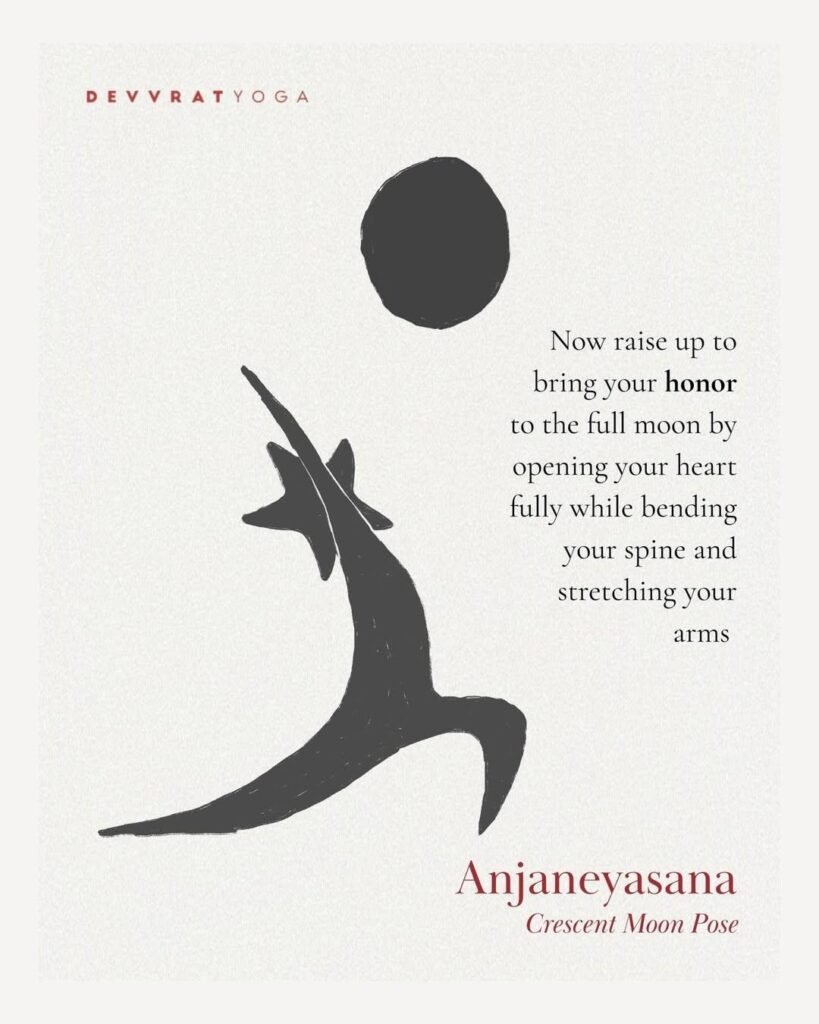
6. Anjaneyasana: Crescent Moon Pose
Slowly stand up from the fold and step one foot forward into a low lunge. Lift your chest and reach your arms up as you breathe in.
Your chest opens and your spine curves gently, making a crescent shape like the moon. This pose opens your heart while keeping your legs strong and grounded.
Keep your breath slow and steady to support the gentle backbend.
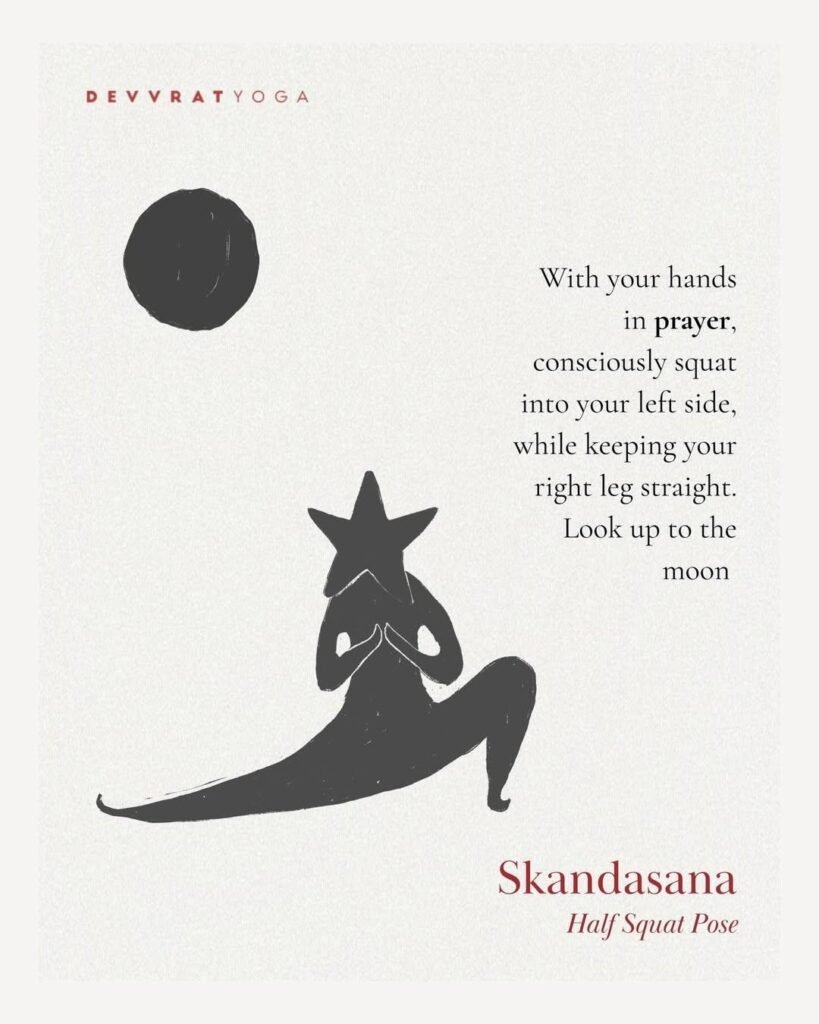
7. Skandasana: Half Squat Pose
Shift your weight to one side and bend deeply in one knee from Crescent Moon. The other leg stays straight.
Bring your hands together at your heart. This pose is strong and steady but still relaxed. Look softly upward like you are gazing at the moon.
Skandasana builds strength and balance, which helps you feel calm and focused.
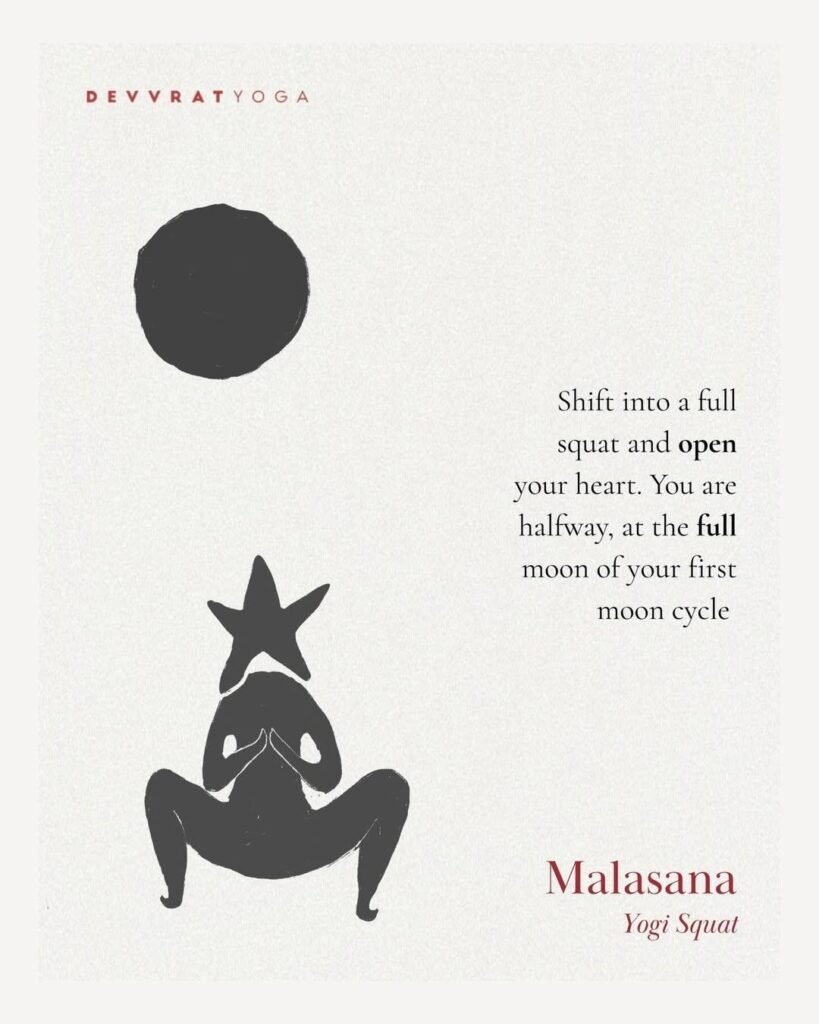
8. Malasana: Yogi Squat
Move into a full squat with both feet flat on the ground and knees bent from Half Squat.
Lift your chest and keep your torso upright as you settle into stillness. This pose is the middle point of the sequence—the full moon moment in your practice.
Pause here. Take deep breaths. Feel the fullness and calm before the cycle begins again.
9. Complete the Cycle
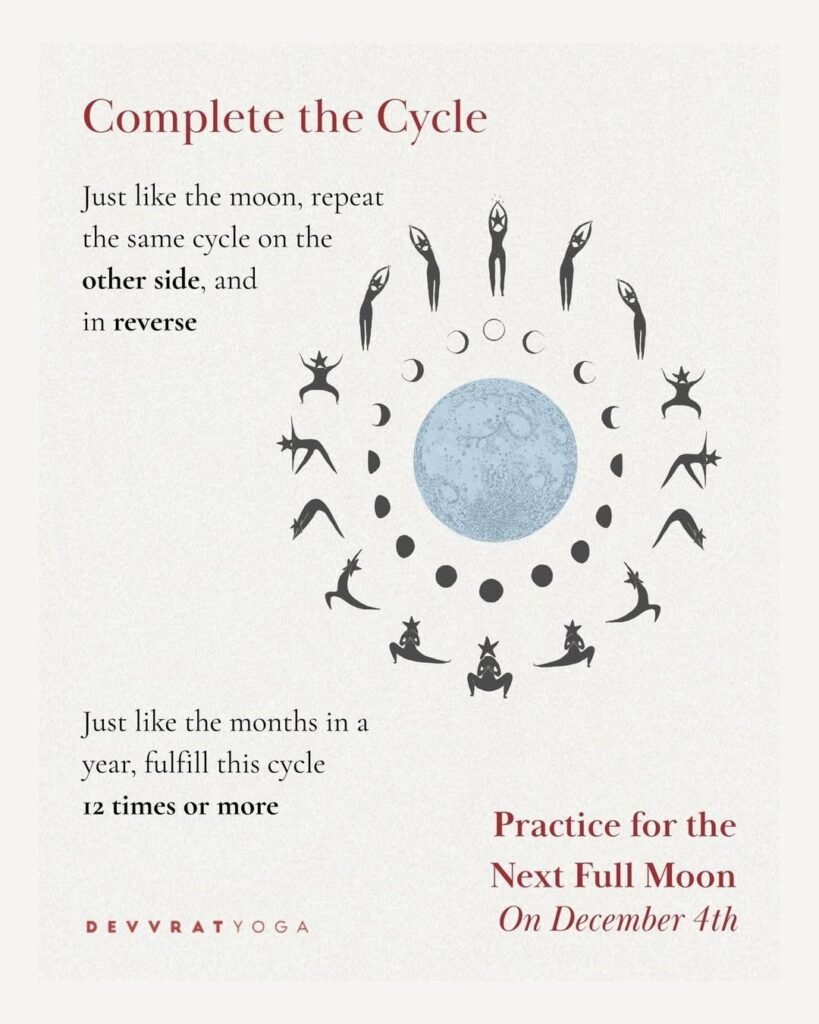
Just like the moon changes phases, now you will repeat the same steps on the other side of your body. This helps your body stay balanced and completes the flow of energy.
Moving backward through the poses helps you become aware of both sides and brings a sense of completion.
Some people like to repeat the whole sequence several times. It helps in connecting with the natural rhythm of the months and seasons.
Practicing With the Moon
Moon Salutation is best done slowly, ideally in the evening or under the moonlight if you can. Keep your breath calm and easy. There is no need to rush or count how many times you do it.
This practice is not about doing it perfectly or achieving something. It is about being present and mindful.
Some people practice it once during the full moon. Others come back to it throughout the month to help stay calm and connected.
Final Thoughts
Moon Salutation teaches us that yoga is not always about pushing forward. Sometimes, it is about slowing down, softening, and letting go.
This practice helps you reconnect with yourself by moving with the natural rhythm of the moon.