
Some days your body feels like it’s running on cold coffee and last night’s leftovers. Other days, it’s a pressure cooker with a short fuse. Yoga noticed this long before productivity gurus did. That’s where Surya and Chandra practices come in — two ancient approaches that work like internal climate control.
Surya means sun. Heat. Action. Fire in the belly.
Chandra means moon. Coolness. Stillness. The soft landing after a long day.
Neither is better. Both are necessary. And most of us are using the wrong one at the wrong time.
The Two Currents That Shape Your Energy
Yogic philosophy talks about subtle energy channels, but you don’t need Sanskrit to understand the pattern.
- When you’re dull, slow, foggy, heavy — you need Surya.
- When you’re wired, anxious, overheated, restless — you need Chandra.
Modern life pushes us into Surya mode all day. Coffee. Deadlines. Blue screens. Notifications. No wonder people crash by evening and then can’t sleep.
Yoga’s answer is not more effort. It’s balance.
What Are Surya (Heating) Practices?
Surya practices stimulate the sympathetic nervous system. They increase circulation, oxygen demand, and mental alertness. You’ll feel warmer, sharper, and more awake.
Key qualities of Surya
- Activating
- Energizing
- Internally heating
- Outward-focused
- Great for mornings and lethargic phases
Common Surya Techniques
- Surya Namaskar (Sun Salutation)
- Kapalabhati Pranayama
- Bhastrika Pranayama
- Right-nostril breathing (Surya Bhedana)
- Dynamic backbends and standing flows
These practices are brilliant when motivation is low and the body feels heavy. But they’re a terrible idea when you’re already mentally fried.
What Are Chandra (Cooling) Practices?
Chandra practices activate the parasympathetic system — the rest-and-digest mode. They calm the nerves, slow the breath, and lower internal heat.
Key qualities of Chandra
- Calming
- Cooling
- Grounding
- Inward-focused
- Ideal for evenings, hot climates, stress recovery
Common Chandra Techniques
- Chandra Namaskar (Moon Salutation)
- Chandra Bhedana (left-nostril breathing)
- Sheetali & Sheetkari Pranayama
- Forward folds and seated hip openers
- Restorative postures
Think of these as switching your body from “urgent email” mode to “dim the lights and breathe.”
Surya Namaskar vs Chandra Namaskar — Not Just a Tempo Change
People often treat Moon Salutation as a slower Sun Salutation. That’s missing the point.
Surya Namaskar is linear, directional, and rhythm-driven. It builds heat through repetition and muscular engagement.
Chandra Namaskar moves in circular patterns, often including side lunges, goddess pose, and wide hip openers. The breath is deeper. The pace softer. The mind quieter.
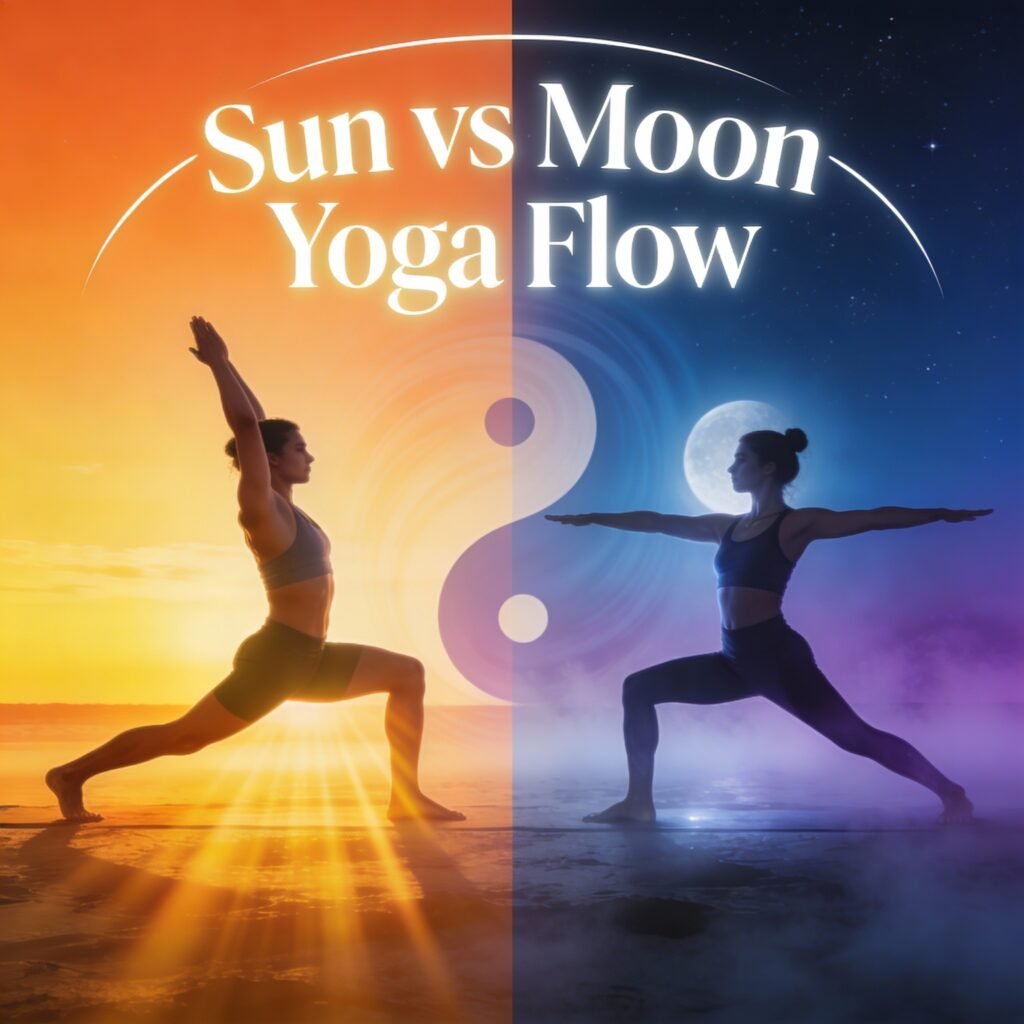
Here’s a simple visual comparison.
In-Content Image Creative 1
Title: Sun vs Moon Yoga Flow
Image description for designer / generator:
A split layout. Left side: bright warm tones (orange/yellow), a person flowing through Surya Namaskar with strong upright posture, morning light, minimal background. Right side: cool blue/purple tones, person performing Chandra Namaskar with wide stance and side stretch under soft moonlight, calm atmosphere.
Heating Techniques — When You’re Running on Empty
Let’s be honest. Some mornings your brain hasn’t booted yet. That’s when Surya shines.
Surya Morning Starter (12 minutes)
- Kapalabhati – 3 rounds of 30 strokes
Clears mental fog and jumpstarts metabolism. - Surya Namaskar – 6 rounds
Move with the breath. No speed records. Let warmth build. - Surya Bhedana – 3 minutes
Inhale through right nostril, exhale through left.
This isn’t spiritual poetry. It’s physiological wiring. You’re telling your system: wake up, we’ve got things to do.
Cooling Techniques — When Your System Is Overheated
Ever feel tired but unable to rest? That’s not lack of energy. That’s too much energy stuck in the wrong gear.
Chandra Evening Wind-Down (10 minutes)
- Chandra Bhedana – 4 minutes
Inhale left nostril, exhale right. - Sheetali Breathing – 10 rounds
Curl the tongue, inhale through it, exhale through nose. - Chandra Namaskar – 4 slow rounds
No rush. Let the movement feel like a sigh.
This practice isn’t lazy. It’s intelligent nervous system management.
Why You Feel Worse When You Mix Them Up
Here’s the quiet reason many people quit yoga.
They do heating practices when they’re already burnt out. Then they wonder why they feel irritated, restless, or unable to sleep.
Or they only do slow, cooling flows when they’re already lethargic — and complain that yoga makes them sleepy.
Yoga isn’t broken. The application is.
The Real-Life Signs You’re Overusing Surya
- You finish practice feeling wired instead of refreshed
- Night-time restlessness
- Short temper after class
- Craving stimulants even after exercise
If this sounds familiar, it’s time to bring the moon back into your mat.
The Real-Life Signs You’re Overusing Chandra
- Constant sluggishness
- Difficulty getting started
- Feeling cold even in warm rooms
- Lack of drive or mental sharpness
That’s your cue to reintroduce fire — gently.
Climate, Food, and Season Matter More Than You Think
People in hot, humid places often feel chronically exhausted. That’s not laziness. That’s internal overheating from environment and diet.
Spicy food + tropical climate + high-stress job + only Surya practices = burnout disguised as discipline.
Likewise, in cold climates or winter months, too much Chandra can deepen heaviness and low mood.
Your practice is not fixed. It breathes with the season.
The Hidden Benefit Nobody Talks About — Emotional Regulation
Surya practices bring suppressed emotions to the surface. You may feel bold, expressive, even confrontational.
Chandra practices soothe emotional turbulence. Tears, softness, or deep release often show up here.
This is why experienced teachers don’t prescribe the same flow to everyone. Mood is as important as muscle tone.
A Simple Weekly Balance Blueprint
You don’t need a perfect plan. You need a responsive one.
| Day Type | Practice Focus |
|---|---|
| Workday mornings | Light Surya |
| Stressful afternoons | Short Chandra |
| Hot days | Mostly Chandra |
| Cold / sluggish days | Mostly Surya |
| Weekends | Blend both |
Balance is not symmetry. It’s responsiveness.
Final Thought: Your Body Already Knows
Surya and Chandra aren’t trends. They’re reflections of how life already moves — effort and ease, fire and water, action and rest.
Most burnout doesn’t come from doing too much. It comes from doing the wrong thing at the wrong time.
Next time you step on your mat, don’t ask:
What did I do yesterday?
Ask instead:
What does my system need right now — sun or moon?