
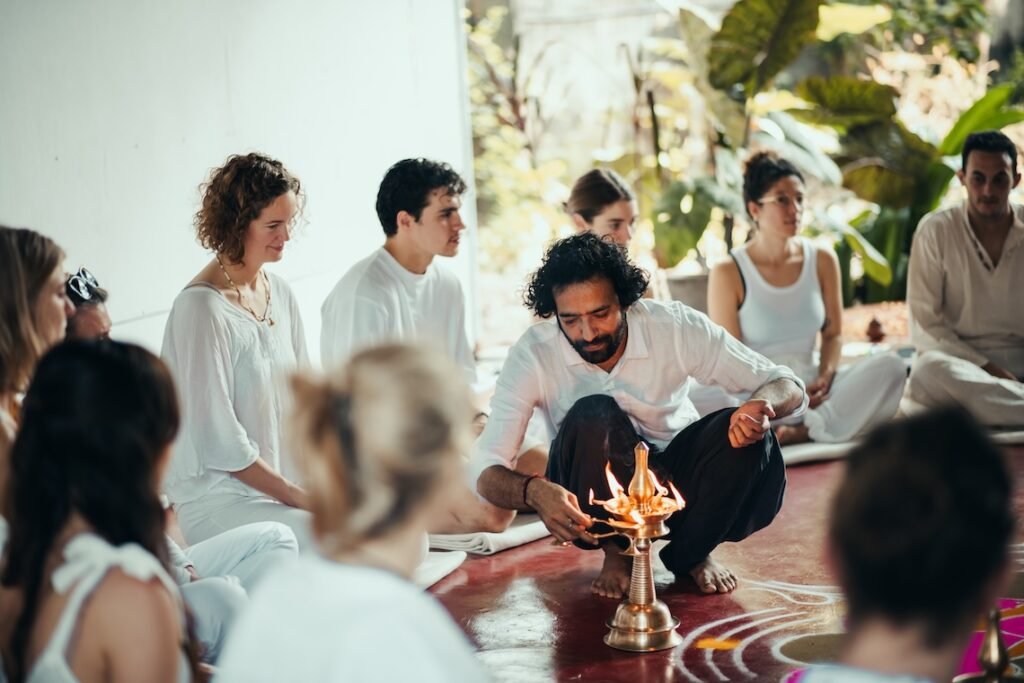
India has always been the home of yoga. For many people around the world, coming here for a 200-hour Yoga Teacher Training (YTT) is a meaningful way to understand yoga at its roots. India offers traditional teachings, diverse yoga styles, a rich spiritual culture, and affordable programs. This makes it one of the most popular choices for beginners starting their teaching journey.
This guide explains everything you should know before enrolling — from curriculum and certification to costs, daily life, red flags, and what comes after graduation.
What Is a 200-Hour Yoga Teacher Training?
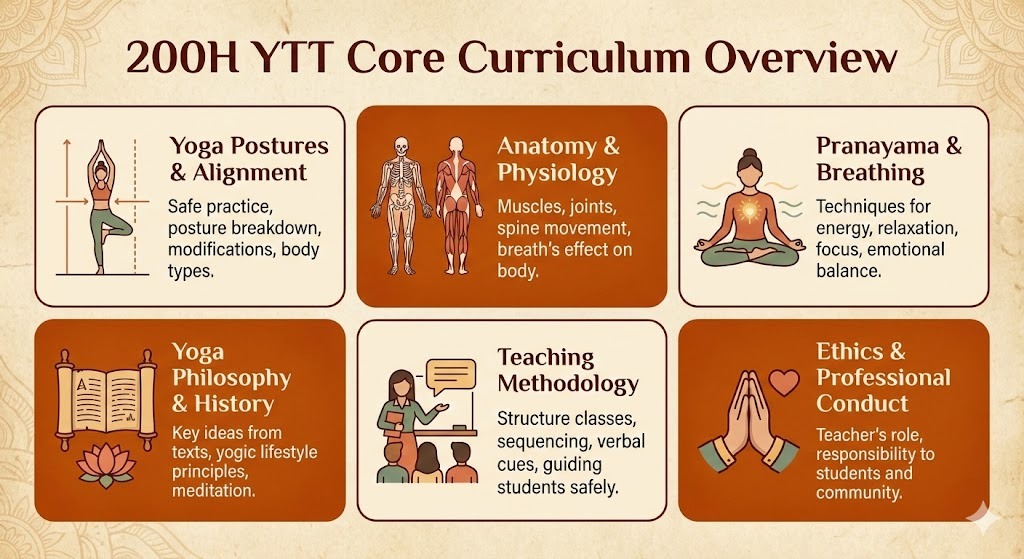
A 200-hour YTT is the foundation-level program for anyone who wants to become a certified yoga teacher or deepen their personal practice. Most schools follow a structured curriculum that includes the following core areas:
Yoga Postures and Alignment
You learn how to practice and teach yoga poses safely. This includes posture breakdown, alignment corrections, and modifications for different body types.
Basic Anatomy and Physiology
You study muscles, joints, spine movement, and how breath and posture affect the body.
Pranayama and Breathing Techniques
Training includes different breathing methods for energy, relaxation, focus, and emotional balance.
Yoga Philosophy and History
You explore key ideas from traditional yoga texts, daily yogic lifestyle principles, and basic meditation practices.
Teaching Methodology
You learn how to structure a class, create sequences, give verbal cues, and guide students safely.
Ethics and Professional Conduct
You understand your role and responsibility as a yoga teacher toward students and the wider community.
Traditional Yoga Schools vs Modern Teaching Approaches
Some yoga schools in India follow specific classical traditions such as Hatha, Ashtanga, Iyengar, or Sivananda yoga. These are often strict, structured, and rooted in lineage-based learning.
Other schools combine traditional foundations with modern styles like Vinyasa Flow and Functional Yoga. These programs are usually more flexible and creative.
Your choice depends on whether you prefer a disciplined traditional path or a modern blended approach.
Accreditation and Certificate Recognition
Yoga Alliance and Other Recognitions
Most international students prefer Yoga Alliance–registered schools because the certificate allows you to apply for the RYT-200 (Registered Yoga Teacher) designation after graduation.
Apart from Yoga Alliance, some respected Indian institutions and traditional ashrams also issue strong, well-recognized certifications.
International Teaching Recognition
Most studios across Europe, the US, and Asia accept Yoga Alliance certificates. However, real teaching experience often matters more than certification alone. Some countries may also require first-aid training before hiring yoga teachers.
Choosing the Right Yoga School in India
With hundreds of schools across India, choosing carefully is essential for a safe and rewarding experience.
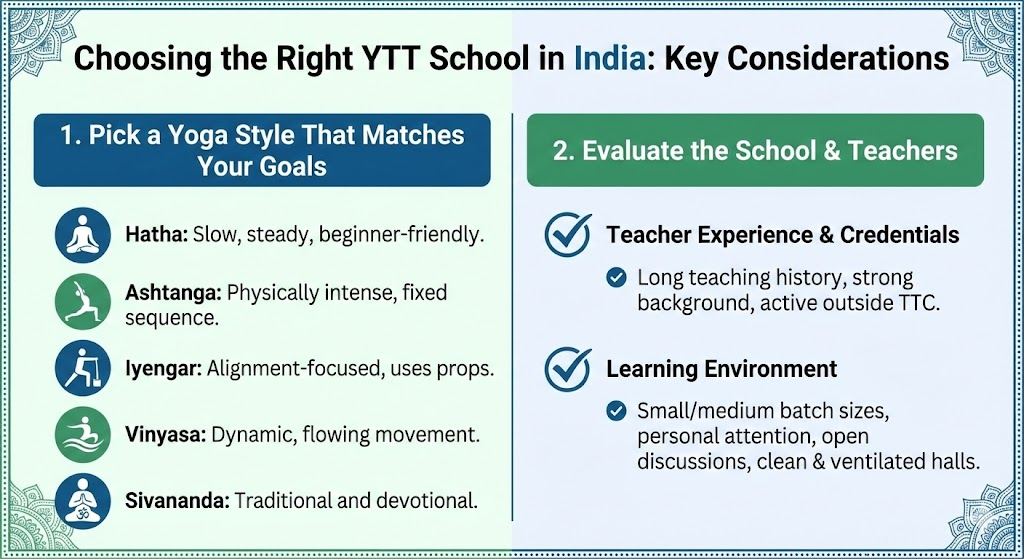
Pick a Yoga Style That Matches Your Goals
Hatha: Slow, steady, beginner-friendly
Ashtanga: Physically intense, fixed sequence
Iyengar: Alignment-focused, uses props
Vinyasa: Dynamic, flowing movement
Sivananda: Traditional and devotional
Check Teacher Experience and Credentials
Look into how long the lead teachers have been teaching, their training background, and whether they actively teach outside TTC programs. Strong teachers shape the entire quality of your training.
Evaluate the Learning Environment
A good school usually offers:
Small or medium batch sizes
Clean, well-ventilated yoga halls
Personal attention during teaching practice
Open discussions and doubt-clearing sessions
Since you will live and learn there for several weeks, the environment matters just as much as the curriculum.
Practical Considerations Before You Book
Understanding the Total Cost
Most 200-hour YTT course fees include:
Tuition
Accommodation
Daily meals
Additional expenses may include:
Airport transfers
Study books
Laundry
Weekend trips
Ayurvedic treatments
Rishikesh and Dharamshala tend to be budget-friendly. Locations like Goa and Kerala usually fall in the mid-range to premium category.
Visa and Travel Planning
Most students enter India on an e-visa. Apply early and keep printed and digital copies of your passport, visa, and admission letter.
Health and Medical Preparation
It’s wise to do a general medical checkup before traveling. Carry basic medicines, rehydration salts, and motion sickness tablets. Some students also consult doctors regarding recommended vaccinations.
Curriculum Expectations and Daily Schedule
A 200-hour YTT follows a disciplined daily routine, often beginning before sunrise.
Typical Daily Schedule
Morning Practice: Asana, pranayama, and meditation
Theory Classes: Anatomy, philosophy, teaching methods
Teaching Practice: Student-led sessions with feedback
Self-Study: Journaling, homework, posture reviews
Seva (Community Work): Simple tasks like cleaning, gardening, or kitchen support (in some schools)
Some programs are physically intense, while others allow a gentler pace for beginners.
Living in an Ashram or Retreat Environment
Shared Accommodation and Routine
Most TTC programs include on-campus stay. Rooms are often shared with one or two fellow students. Meals are vegetarian and simple. Life follows a strict daily schedule to support focus and discipline.
Emotional and Cultural Adjustment
The first week may feel overwhelming due to homesickness, physical soreness, and cultural differences. Journaling, nature walks, and staying connected with family help most students adjust smoothly.
Ayurvedic Food and Daily Habits
Many schools follow Ayurvedic dietary principles with light, plant-based meals. Some also offer herbal drinks and light cleansing rituals as part of daily routine.
Post-Training Career Path and Growth
After completing the course, most graduates begin with:
Community yoga classes
Studio assistant roles
Online teaching
Wellness retreats
Confidence grows naturally with regular teaching.
Continue Your Education
Many students choose to:
Join a 300-hour advanced teacher training
Attend specialized workshops
Learn under senior teachers through mentorship programs
Build Your Online Presence
A simple website, Instagram page, or YouTube channel helps you reach students worldwide. Sharing short class clips, breathing exercises, or alignment tips builds visibility and trust.
Red Flags and How to Avoid Scams
Be careful of schools that guarantee jobs or instant mastery
Always read the refund and cancellation policies carefully
Verify reviews across different platforms
If possible, speak directly with past students before booking
Join Our 200-Hour Yoga Teacher Training in Varkala, Kerala
If you are looking for an authentic and well-structured 200-hour Yoga Teacher Training in India, our school in Varkala, Kerala offers internationally recognized Yoga Alliance–certified programs in a peaceful ocean-side setting.
What you can expect with us in Varkala:
Traditional Hatha and Vinyasa-based training
Daily meditation, pranayama, and philosophy
Small batch size with personal guidance
Ocean-view yoga halls near Varkala beach
Comfortable accommodation and nourishing yogic meals
Strong focus on teaching confidence and alignment
Whether you are starting your teaching career or deepening your personal practice, Varkala’s calm coastline and supportive learning environment create the ideal foundation for your yoga journey.
Explore our upcoming 200-Hour YTT intakes in Varkala and secure your seat today.
Conclusion
A 200-hour Yoga Teacher Training in India can be truly life-changing when you choose the right school and prepare well. Look beyond the price. Consider the teachers, teaching style, environment, safety standards, and learning structure before making your decision.
Take time to research. Speak with graduates. Trust your intuition.
When you feel ready, get in touch with us for a free YTT planning checklist to compare programs and choose the best training path for your goals in Varkala, Kerala.