
Completing yoga teacher training is an exciting time. You feel proud of everything you have learned, but it is also normal to feel a bit unsure about how to become a real teacher. Many new graduates have strong yoga skills but worry about leading classes on their own.
Becoming a confident teacher doesn’t happen right away. It takes time, practice, and gently building your confidence. You might wonder where to teach, how to plan your classes, and how to feel comfortable guiding others. These questions are completely normal, especially when you are just starting.
This guide is made to help new teachers who want clear and practical advice on how to start teaching yoga after YTT. It explains easy steps to begin teaching yoga without feeling overwhelmed or confused. Whether you want to teach yoga part-time or make it your long-term yoga teaching career, these new yoga teacher tips will help you take steady, confident steps forward.
Step 1: Practice Your Teaching Skills Immediately
The first step in how to start teaching yoga is practicing your skills. A common mistake new teachers make is waiting too long to start. Confidence does not come from waiting; it comes from doing.
Practice Teaching Right Away
Begin by leading short yoga sessions for friends, family, or fellow students. These early classes help you get comfortable speaking clearly, giving instructions, and keeping time.
You can also try:
- Recording yourself teaching and listening to it afterward
- Practicing cueing poses out loud while you move
- Teaching the same short sequence several times
These simple steps help you get used to your teaching voice and pacing. Every little class you teach helps you grow and feel more confident.
Step 2 – Start Small With Community or Donation-Based Classes
You don’t need to begin teaching in a busy yoga studio. Many new teachers start in relaxed and simple places where there is less pressure.
Look for spots where people expect less, like community centers, parks, beaches, donation-based yoga classes, or even friends’ living rooms. These settings make it easier to learn and feel comfortable.
Students are usually more relaxed, and making mistakes does not feel as stressful. Many teachers discover their own style in these kinds of spaces.
Step 3 – Create Your Yoga Teacher Profile & Basic Online Presence
You don’t need a fancy website or tons of followers to start teaching yoga. Having a clear and honest online presence is enough to begin.
Focus on the basics:
- Write a short bio about your training and what you like to teach
- Pick one social media platform, like Instagram
- Clearly share your class times and locations.
Use natural photos and simple words. You can post short updates about your classes, your practice, or what you are learning as a teacher. The goal is to be clear and genuine, not perfect.
Step 4 – Build a Simple Class Sequence You Can Teach Confidently
Many new teachers try to create a new yoga sequence for every class, which can quickly become stressful and confusing. Instead, focus on building one reliable class you feel confident teaching.
Create a simple, balanced class with a clear warm-up, a steady flow, easy standing poses, and a calm closing. Teach this same class again and again. Each time, you will find small ways to improve how you give instructions, manage timing, and move between poses.
Practicing the same class helps you feel more comfortable and confident.
Step 5 – Approach Studios, Cafés, and Co-working Spaces
Yoga studios are not the only places to teach, especially when you are just starting.
Try offering classes in different spaces like cafés during quiet hours, co-working spaces, guesthouses or retreats, and wellness events. Reach out with a short, friendly message telling them who you are and what kind of class you can offer. Many places are happy to try something new and welcoming to beginner teachers.
Step 6 – Continue Learning and Taking Feedback
Finishing your yoga teacher training is just the beginning of your learning journey.
Stay open to feedback by asking your students how they feel after class. Connect with other teachers and attend workshops when you can. Keep growing by teaching more classes, watching other teachers, and thinking about what went well or what could improve after each session.
Remember, becoming a great teacher takes time and curiosity. It does not happen overnight. Keep learning and enjoying the process.
Common Concerns New Yoga Teachers Have
These worries are a natural part of starting when you are looking for how to start teaching yoga. Confidence builds over time through patience, practice, and showing up regularly to teach.
- Many new yoga teachers worry they don’t know enough. It is important to remember that teaching skills grow with experience. No one starts out knowing everything, and you’ll keep learning naturally with each class you teach.
- Forgetting poses or sequences is also very common at first. As you teach more often, your memory will improve, and your classes will flow more smoothly.
- Some new teachers feel their voice is too soft or quiet. It is normal, and confidence in speaking clearly comes with practice and getting comfortable with your teaching style.
- It is easy to compare yourself to more experienced teachers and feel discouraged. However, every teacher grows at their own pace. The key is to focus on your own steady progress, not on comparing yourself to others.
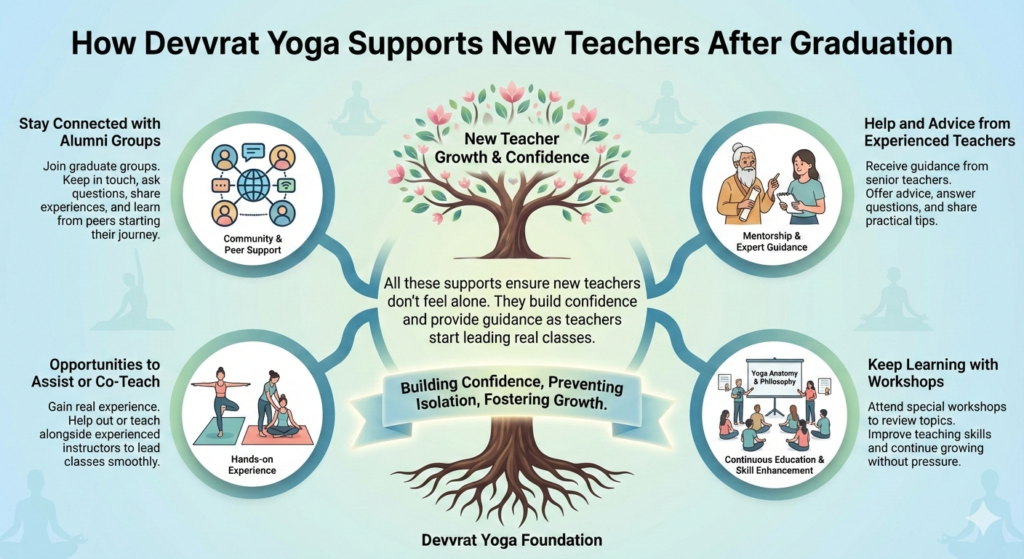
How Devvrat Yoga Supports New Teachers After Graduation?
All these supports make sure new teachers don’t feel alone when they are learning how to start teaching yoga. They help build confidence and provide guidance as teachers start leading real classes.
Stay Connected with Alumni Groups
After training, graduates can join alumni groups where they can keep in touch, ask questions, share their experiences, and learn from others who are also starting their teaching journey.
Help and Advice from Experienced Teachers
Senior teachers are there to offer advice, answer questions, and share tips to help new teachers feel guided and supported as they begin teaching outside of training.
Opportunities to Assist or Co-Teach
New teachers often get chances to help out or teach alongside experienced instructors. It gives them real teaching experience and helps them learn how to lead classes smoothly.
Keep Learning with Workshops
Workshops and special classes help graduates review important topics. These help in improving their teaching skills and keep growing without any pressure after finishing training.
Conclusion
Starting to teach yoga after training can feel uncertain. However, it does not have to be overwhelming when you know how to start teaching yoga. Begin small. Teach often. Stay honest and simple in your approach.
If you feel called to teach, trust that feeling and take one step at a time. Growth comes through showing up.
If you are still considering training or want to deepen your teaching skills, joining a 200H or 300H yoga teacher training program can provide the foundation and support you need.