
Surya Namaskar is one of the most energizing parts of a yoga practice. The sequence builds heat, strengthens the body and brings focus to the breath. Even though the flow looks simple, it places demands on the shoulders, hamstrings, spine and wrists. A proper warm up helps protect your body, reduces the chance of strain and prepares you for smoother movement. You do not need long routines or complicated work. A few purposeful warm up steps can change the quality of your entire practice.
Below is a clear guide to warming up correctly so you can move into Surya Namaskar with confidence and ease.
Why Warming Up Before Surya Namaskar Matters
Many students jump straight into sun salutations without preparing the major muscle groups. This often leads to stiff movements, rushed breath and a higher risk of discomfort.
Better Mobility and Alignment
A warm body moves differently. Muscles feel open, joints respond faster and the breath flows naturally. This helps you move through each part of the sequence with proper alignment.
Reduced Risk of Injury
Surya Namaskar involves forward folds, upward stretches, weight bearing on the wrists and deep spinal movements. Preparing the body keeps sensitive areas like the lower back, shoulders and knees protected.
A Smoother Mind-Body Connection
A short warm up helps you shift mentally into the practice. Breath awareness begins early, which carries through the entire sequence.
How Long Should the Warm Up Be
You only need five to seven minutes of focused warm up. The aim is to gently activate key areas, not to exhaust yourself before the sequence. The routine below is structured to open your spine, loosen your hamstrings and prepare your shoulders and wrists.
Step-by-Step Warm Up Before Surya Namaskar
Follow this sequence to prepare your body in a balanced way.
1. Gentle Breath Awareness (1 minute)
Sit comfortably at the top of your mat. Begin with slow breathing. Allow the breath to deepen naturally without force.
Why This Helps
Breath awareness calms the mind and helps you avoid rushing through the warm up. It also prepares your lungs and diaphragm for the rhythmic breathing that sun salutations require.
2. Neck and Shoulder Loosening (1 minute)
Neck stiffness affects your posture during forward folds and upward facing positions.
Simple Movements
• Slow neck circles
• Shoulder rolls forward and backward
• A few relaxed shrugs
These small movements release tension that often builds up from sitting, screens or daily stress.
3. Wrist Warm Up (1 minute)
Surya Namaskar includes plank and chaturanga, both of which load the wrists.
Useful Wrist Movements
• Rotate both hands in circles
• Open and close your palms slowly
• Place palms on the mat and gently shift weight forward and back
A few moments of wrist preparation makes the transition through chaturanga much safer.
4. Cat-Cow Flow (1 minute)
Move to a tabletop position. Inhale to lift your chest for cow. Exhale to round your spine for cat.
Benefits
• Warms the entire spine
• Activates the core
• Improves mobility in the shoulders
This movement prepares you for upward facing dog and forward folding.
5. Hip Opening with Low Lunge (1 minute)
Step one foot forward and drop the back knee. Keep your spine tall and breathe slowly.
Why This Prepares You Well
Surya Namaskar uses lunging positions. Opening the hip flexors beforehand helps you avoid strain and improves your step-back and step-forward transitions.
Repeat on both sides for balance.
6. Hamstring Activation (1 minute)
Straighten your front leg from the low lunge. Flex your toes and fold gently over your front thigh.
Why It Helps
Forward folds in Surya Namaskar require warm hamstrings. This stretch prepares them without pushing too deep.
Keep your breath slow and your spine long.
7. Spinal Lengthening in Half Forward Fold (30 seconds)
Come to a standing position and place your hands on your thighs or shins. Extend your spine forward and create length from your tailbone to the crown of your head.
Purpose
• Engages the core
• Encourages proper alignment for forward folds
• Helps transition smoothly into the first Surya Namaskar A
8. Gentle Standing Backbend (30 seconds)
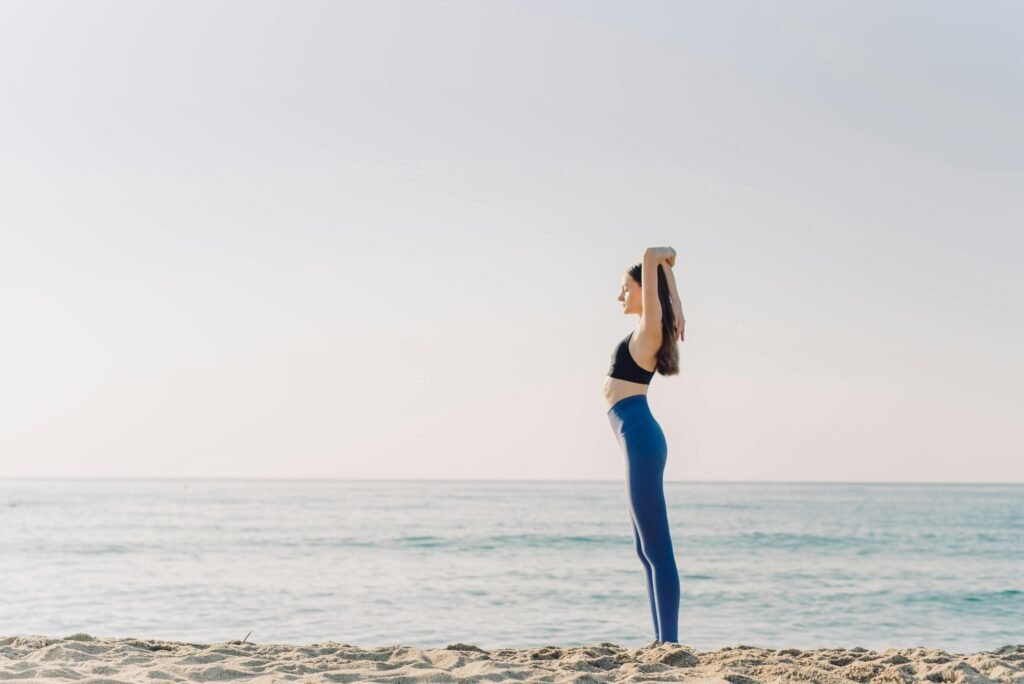
Stand tall with arms raised overhead. Lift your chest and gently arch back while keeping your lower back stable.
Reason This Helps
Surya Namaskar begins with an upward stretch. Preparing your spine for this movement creates openness across the chest and avoids unnecessary compression in the lower back.
Putting It All Together
Your warm up should feel intentional and steady. Each part prepares a specific area of the body used in Surya Namaskar. The full routine is short, simple and easy to remember.
Total Warm Up Time
About 6 to 7 minutes.
What You Should Feel Before Starting Surya Namaskar
• A warm spine
• Open hamstrings
• Loose shoulders
• Strong breath
• A sense of mental calmness
Once you feel these sensations, your body is ready to flow through the sequence.
Additional Tips for a Better Warm Up
A few small habits will improve your warm up and the way your entire practice feels.
Move With the Breath
Each movement should follow a slow inhale or exhale. Breath guided warm ups wake up the nervous system and create steadiness during sun salutations.
Start Small and Build Gradually
If your body feels stiff, keep the movements gentle. As you warm up, you can deepen the poses naturally.
Avoid Forcing Stretching
Warm ups are meant to prepare, not push. Forcing yourself deeper can strain your back or hamstrings. Comfort and control matter more than intensity.
Stay Aware of Your Lower Back
Surya Namaskar includes backbending and forward folding. A warm lower back moves safely in both directions. If you feel any tightness, add a few extra rounds of cat-cow.
Stay Consistent Every Day
Even if your practice is short, do not skip the warm up. Consistency protects your body, improves your form and helps you sustain a daily routine.
Conclusion
A proper warm up is the foundation of a strong Surya Namaskar practice. You do not need long or complicated preparation. A focused sequence of breath awareness, spinal mobility, wrist activation and gentle stretching helps you start the flow with ease and confidence.
By warming up mindfully, you will notice smoother transitions, better alignment and a more enjoyable experience on the mat. Over time, this small commitment transforms not just your practice, but also the way you move throughout your day.